Showing posts with label my story. Show all posts

Wednesday, January 11, 2017

Do You Remember...?

I've always had a bad memory, it seems. Always. I could memorize things, no problem—that really helped on tests. But when it came to remembering that I had to take out the trash, or remembering where I'd left my pen? Utter failure. I was famous for it in my family. (I've been known to forget where I left my glasses. This is not unusual, but it once took me about five minutes of searching to realize that I was wearing them.)

That seems to be common among people with epilepsy. The UK group Epilepsy Action reports that memory problems are one of the most common reasons for people with epilepsy to seek help. (They have a great page on the subject. Have a look.) Obviously loss of consciousness during some seizures prevents you from remembering what happened, but epilepsy can also cause interference with the brain's normal memory-forming processes even in between seizures. The same unusual brain activity that can give your neurologist clues about your epilepsy when you have an EEG can interfere with memory as well. Epilepsy can make us tired, or stressed, or depressed. That doesn't help either. And if your seizures start in the temporal lobe of the brain, where your memory lives, obviously that makes things worse.

Sad man can't remember where the temporal lobe is.


Some epilepsy medications can affect your memory too. Of the five times I've changed medications, three were because I felt my memory and my thought processes going fuzzy. That really scares me, because if I don't have my memories or my thinking, what's left of me? So I fight back by switching medications.

Given that a lot of us can't do much to prevent it, how do we cope? For me, I usually forget things like "Where did I leave this?" and "What did I come here to do?" and "What errands do I have to do?" So one thing that helps me a lot is using sticky notes. Writing stuff down and leaving it every imaginable place really boosts my ability to remember.

Well, maybe not every imaginable place.

If I put something down, I also try and pause for a few seconds and say to myself, "I left my phone on the table. I left my phone on the table." Or if I go into the kitchen to get my wife a drink, I'll tell her, "I'm getting you a drink." Repeating things like that can fix them in my mind better. It doesn't completely fix things, but it does help.

For anyone who's close to someone with epilepsy, please do keep this in mind. We do listen. We try our best. But sometimes, information just leaks out. Please be patient with us. Cut us a little slack when we lose track of things. Maybe you can help us with the memory aids.

And thanks for staying by us. That's what we need most of all.


Wednesday, November 23, 2016

Baby I Can't Drive My Car

With apologies to the Beatles, at least for those of you who are old enough to remember them :-)

I've told you before about one of my first seizures while living alone. But it wasn't my very first one. That was much scarier.

When I moved out of my parents' house in 1993, I had a gray 1983 Chevy Cavalier that I was really proud of.
Like this one, only the hood actually closed.
It drove my brother and me from St. Louis to the Seattle area, and drove me back and forth to work a lot. A good car. The kind that you'd expect someone to name; but I never actually thought of doing that. (I probably would have named it Henry. Or Lucius.)

So my dad, the dentist, had recommended a dentist friend of his to look after my teeth, and after a while I decided I'd better go see him. The drive down wasn't bad. Parking in downtown Seattle was unnerving—I wasn't used to all those hills. (St. Louis isn't completely flat. Only mostly.) The dental appointment itself was what you'd expect; funny smells and uncomfortable things in your mouth. But I was used to that. It was the drive back that I didn't like.

Everett, where I was living, is about 25 miles north of Seattle, and you'd expect that the quickest way there would be I-5, which passed about a mile from my apartment and went straight through downtown. But having experienced traffic there, I decided to stay away from it and use State Highway 99, which was quieter. Man was that a good choice.

I must have been about halfway home when all of a sudden I felt the familiar tingling and numbness in my left arm and shoulder. I knew I was going to have a seizure, it was going to be the full-on tonic-clonic, and I couldn't do anything to stop it. And me driving fifty miles an hour down a major state highway.

Why, yes. Yes we are.
The last thing I remember even vaguely was slamming on the brake. I could still do that even though I couldn't move my arms anymore. I didn't have any idea of whether that would help, or what it would do, or even if I was actually just imagining it and not really doing anything. I just knew I needed to try and slow down. And then twitch, jerk, convulse, darkness.

Next thing I knew, I was in Group Health Lynnwood Medical Center. I don't remember much about it. I was fine. Not even a Band-aid. Someone had managed (apparently) to get to my car, stop it, call an ambulance, extricate my wallet and see my medical ID, and get me AND MY CAR NO LESS to the hospital. And I was fine. I couldn't have asked for a more amazing miracle. Or could I?

Once I began feeling better (I guess), I was worried about Henry. Or Lucius. Or whoever. After all, last I remembered I was flying down the highway and then jamming on the brakes. Surely something had happened.

But they said my car was in the parking garage. They even walked me out to it. Henry Lucius The car was completely fine. There was no scratch, no dent, no nothing. I was overjoyed! So who had done this for me? The people had left, they said. They had checked to make sure I'd be all right, and then they had left. I drove home, thankful, thoughtful, tired, scared, relieved.

I don't remember a whole lot of details after that. I knew I couldn't legally drive for a year. (That's a long time, in case you feel inclined to try it.) I checked out bus routes, called my insurance company to let them know the car was being parked for the rest of the year, resolved that walking would do me good. Then relaxed and felt thankful that I wasn't one of the 40 thousand or so who died that year of epilepsy and epilepsy-related accidents.

Most people don't get a miracle. Not like that anyway. I was sad that I didn't get to thank whoever it was that did this for me. I sometimes wonder about them. Who were they? Where were they going? Did they mind rescuing me? Do they ever say, "Hey, remember that guy we pulled out of the car?" I'll probably never get a chance to thank them, but it's not unlikely that I wouldn't be here without them. That's humbling.

Tomorrow is Thanksgiving in the US; I'll be leaving work and going home shortly to enjoy the holiday. As I do, I'll be remembering those of you who have stood by me in my epilepsy the last twenty-eight years, whether I know you or not. Whoever you are, whatever your reason—thank you. Thank you for everything.

Matt

Friday, November 18, 2016

Testing Testing Part 1 - EEGs

As I write this first sentence, I'm in the neuro office waiting for my first EEG since changing my meds. For those of you who don't have experience with an EEG, it's basically an electronic recording of your brain activity. A technician pastes 16, or 24, or more wires onto your scalp and hooks you up to a machine that listens for electricity coming into them from your brain. It can be as short as 20 minutes, or as long as 3 days or more. Mine is going to be an hour. 

(Note: For staffing reasons beyond my control, the exam was in fact a "routine" 30-minute EEG.)

The machine looks a bit like an octopus, with all those wires. I unfortunately didn't get a picture of me with the wires on, but I've always thought the EEG machine itself looked cool.

The Machine. Probably without Florence.
Most of the time, you're sitting (in my case, lying) down with your eyes closed. The doctor wants to get a good picture of your resting brain. I always fall asleep. They do need to try a couple of stimulus situations, though. About 1 out of every 30 people with epilepsy (about 3%) are sensitive to bright or flashing lights. So the EEG tech will set up a strobe light right over your face and strobe the light right into your eyes, to see if anything happens. You do get to close your eyes, but the light is only about eight inches from your face so it doesn't seem to make much difference. Then, they'll have you hyperventilate for two minutes. This makes me dizzy and dries out my throat, but doesn't seem to do anything else. Some people have seizures while they're having an EEG. This is very useful to the doctor, I guess; not so much fun to the patient.

My particular EEGs are pretty boring, mostly. Once a year or so, I go into a room, get my scalp measured and marked off with a pencil (which is painful—your scalp wasn't really meant as drawing paper), get wires pasted onto my scalp, lie down on a hospital bed, and then mostly close my eyes and lie there listening to the tech click away with keyboard and mouse. It's a good thing they want you to fall asleep. But they're the best quick view my neuro has into what's going on with my brain, so I deal with it.

Besides, who would miss a chance to get off work to take a nap?

The Epilepsy Foundation of America has (as usual) a really good quickie discussion of an EEG with more information available.

Wednesday, October 19, 2016

Pachygyria, Heterotopia, And Other Weirdness

Do you guys know what the brain looks like?

Not this one. Although I do ask, "Gee, Brain, what do you want to do tonight?"

 It looks like a big wrinkled blob of meat:

 
Yeah, kinda gross.


Still, everything has its place and function, and the brain is really really cool when it works right. Which, of course, means that when it doesn't, things can go really wrong. Including having seizures.

If you look at the sliced-up part of the brain there, you'll see that the brain has two kinds of tissue: the inside is called the white matter and the part around the edges is called gray matter (even though it looks pink to me; maybe someone was colorblind?) The bumpy parts on the outside are called gyri and the cracks in between are called sulci. Oh, and the two halves of the brain you can see? They're connected in a few places, the most important being the corpus callosum, near the bottom of the brain right in the middle.

I couldn't find an actual picture, but this is what it looks like on an MRI.

Bear with me guys; I know you probably weren't expecting an anatomy lesson but I promise this is relevant.

The brain gets sorted into gray matter outside and white matter inside during about the fourth month of pregnancy, and the gyri and sulci develop from about the fourth to sixth month. The corpus callosum starts developing about the fifth or sixth month and continues at least through birth.

Unless of course you're me. Then things go every which way.

For nearly twenty-five years, nobody could understand why I was having seizures. Then my neurologist finally (FINALLY) said, "Let's have a high resolution MRI and see if we can figure it out."

They stuff you in this for 45 minutes. It makes a ton of noise
and magically sees inside your skull.

When the report came back, I read it before the doctor did (I worked in the radiology clinic, so I could do that :-) ) There were all kinds of words I didn't know: pachygyria, dysgenesis, heterotopia. I was a bit scared.

Basically here's what happened: Before I was born, when my brain was developing, that gray matter didn't make it all the way out to the outside of my brain where it belongs. I have big lumps of gray matter on the inside - gray matter heterotopia. Because all that gray matter is on the inside, the stuff on the outside is thinner than it's supposed to be, and my gyri are spread out wider than they should be and the sulci are shallower - that's pachygyria. Finally, it looks like my corpus callosum did not develop correctly. Go back up and look at the picture. See the bulb at the back and the hook at the front? Not there on mine.

Now most people with these conditions, as severe as mine are, have seizures early in life: as early as age 3, and almost certainly by 9 years old. My seizures didn't start until I was 20. I'm lucky there. And very lucky indeed that I didn't experience the intellectual deficits and learning disabilities people with these conditions nearly always do. My neurologist, when he saw the report from the MRI, said, "Go home and thank your parents for your good genes!" The neuroradiologist looked at the pictures, then looked at me, and said "Are you sure this is you?"

So there are a lot of worse things that could have happened to me, and I am thankful every day that they didn't. I did thank my parents for what they had passed down to me, and I have a lot more respect than I did for my brain, which somehow finds a way to function well above normal when by all rights it shouldn't even be able to get to "normal". I feel better about myself, and about my epilepsy, than I did before I knew what was going on.

About 2 out of 3 epilepsy patients, though, don't know why they have epilepsy, and never will. For you guys, I look with awe at your bravery. I really do. And so should everyone. Something terrible has happened to you, for no apparent reason, with no apparent cure, and yet you find a way to slog along through life; even to be happy and smile. You're amazing, you know? Don't forget that.

And you guys without epilepsy? You're great too. But pay attention to those around you. They may be going through more than you know.

I want to call out my friend Daisy Robson, a fellow epilepsy blogger. She's recently been in the ICU and is still recovering from having a hideous lot of seizures. She and her mom, in particular, have really gone through hell in the last week. If you could just keep them in mind; pray for them if you pray. They could use it. Thanks!

Wednesday, October 12, 2016

Note To Self: You Have Epilepsy


It's not normal for me to change my medication; I haven't for years. But a few weeks ago I had just HAD IT with Trileptal. I told my neuro that I was tired of being tired, tired of the memory problems, tired of the more than occasional dizziness and lightheadedness and double vision. My last neuro had told me, "Well, at least your seizures are under control." Yeah, they were. But at what cost?

Many people with epilepsy are much less lucky than I am. My friends Tori, Daisy, Sam, and Brendan all have seizures that are not well controlled at all, in some cases not even with multiple medications. I'm fortunate to have been pretty well-controlled almost from the beginning. In the twenty-eight years I've had epilepsy, I've changed medications five times. Only once was because the medication didn't work. The other changes were made to try and cope with side effects. Changing medications merely to avoid side effects is a privilege I have that many don't; and I'm very much aware of that.

So my doctor told me about a newer medication, Vimpat, that I'd only have to take twice a day. She also commented that I was taking an awful lot of Trileptal. Like, a LOT lot. I wish she had told me that earlier; I would have changed up the meds long ago. So we made a plan: I'd start taking the Vimpat, beginning gradually as usual with only 50 milligrams twice a day, then increasing weekly to 200 milligrams twice a day by the end of four weeks' time. Once that was well in my system, we would gradually decrease the Trileptal in the hope of weaning me off it altogether.

It almost worked. As I began the Vimpat, my side effects became stronger, appeared more often, and lasted longer. By the end of three weeks, I was showing up to work incapable of doing anything. Time to see the neuro again.

"That shouldn't be happening," she said. Yeah that was kind of what I guessed. "Since you're basically on a therapeutic dose of the Vimpat, go ahead and start decreasing the Trileptal and we'll see what happens."

So we did. From 2700 milligrams (four and a half monstrous horse pills) a day, I cut down to 1500. Then 1200. Then 900. And then, the seizures started happening. After having three partial seizures in the course of a weekend (normally I get that many in nine or ten months), it was back to the doctor once more. She moved me up to the full dosage of Vimpat, and pushed my Trileptal back up from 900 to 1200 milligrams a day.

And that's where I stand now. Since I decreased the Trileptal, I haven't had any side effects. And I'm now noticing the effect that Trileptal had on my thinking; I'm much quicker to understand things, and I forget less. On the high dosage, I guess I was too fuzzy to notice how badly I was thinking, but I'm doing much better now.

Am I happy to still be on the Trileptal? No, not really; after all, that's what was giving me these nasty side effects, and I'm not completely sure I'm done with them. I'm not especially happy to be on two medications, period. It was really convenient having only one kind of pill to take; twice as many medications, in my mind, is twice the chance to forget something. And my "always take it with you" pill box has more to carry.

But I've been reminded of something really important: I have epilepsy. Much as it annoys me, much as I'd rather express my individuality and my difference some other way—pretty much any other way—this is a part of me, and it always will be. It's something I have to face. I'm not always happy about it. But I am what I am, you know? You guys with epilepsy, you're stronger than you know. We all are. We'll do this, together.


I met Tori, Daisy, Sam, and Brendan on a Facebook epilepsy support/epilepsy blogger group. Daisy, Sam, and Tori have amazing blogs documenting their journeys: Daisy's at My Seizure Journey, Sam's at The Storm Inside My Head, Tori's at Epileptic20Something. Please check their blogs out—all three of them are great writers, and everyone has a different journey and different things to teach us.

Friday, September 23, 2016

What Happens When Medication Doesn't Work?

So I told you about one of the first seizures I had alone. But I didn't give you the whole story.

About a year after I was first diagnosed with epilepsy, I switched medications and began taking Depakote, a drug with quite a few potential side effects—as always—but quite good seizure control. I was happy; my doctors were happy; life was good. Good enough that I was comfortable moving 2000 miles away to a new job.

After my job interview, work went quite well: I virtually forgot, and so did everyone else, that I had seizures or anything at all. I took my pill in the morning, and then I took my pill again at night, and I just went on with my life. That's how it's supposed to be, right?

And so life went on; I got through (as I remember) most of my first year just fine. Parent-teacher conferences went fine; my trip back home over Christmas went fine; and I was looking forward to finishing the school year.


Life went on nicely, then, until I had that nasty seizure I told you about. I immediately (well, as soon as I could think again) made an appointment with my neurologist. After all, if you're taking a drug, it's because it works, and you expect it to keep working.

Bottle of white pills, open and spilled on table.
A good medication is one that works, after all.

I didn't know why it wasn't, and it scared me. Was I going to have another seizure again? When? Where?  At work? Walking home from the grocery store? Falling down stairs?

Well, the doctor explained to me, in some cases the drug doesn't keep working the way it began. If your body develops tolerance, and gets used to the medication, the drug can just stop having any effect.

Drug tolerance just means that your body gets more used to a drug. With Depakote, one of the ways this can happen is that your brain can start getting overwhelmed with how much it's receiving, and actively push the drug away from where it most needs to be. This doesn't appear to happen very often, and if the drug is initially successful, it almost always continues to be.


But not in my case. My body was reacting just as if I hadn't taken anything in days. The neuro increased my dosage from 1200 mg a day to 1800, and I was fine—for another month, at least. Then another seizure, and another medication bump: to 2400 mg. This time the neuro looked concerned. I was already concerned.

One of the cautions with Depakote is that it can be toxic to your liver. At 2400 mg a day, my doctor explained, I was pushing up to a point where it wouldn't be safe for me to take much more.  "I think we need to try something else," he said.

Well, OK. But what are the guarantees that something else would work? Would I have to change again? Would I develop tolerance out of nowhere again and have unexpected seizures? All sorts of questions popped up. But anything was better than seizures at that point; what other option did I have?

So I moved on to Tegretol, which worked quite well for me for a long time, and that was that. I've never developed tolerance to anything else; but I've always been on the lookout.

I guess that's the lesson. I'm very aware of what I'm taking, and I've never again been complacent and willing to trust that a medication will "just work". At the same time, I'm happy that there are a lot of options, and I realize that what happened to me was very rare and probably just a fluke. If you take medication for any condition, check it. Know your side effects; know your alternatives. And if anything weird or unexpected happens, tell your doctors. They should be able and willing to help you to something better.

Knowing your meds is part of owning your epilepsy. You can do this!

Friday, September 9, 2016

What If Somebody's Watching? What If Nobody's Watching?


There are two seizures I remember having in my first year away from home: one partial, one generalized. (Here's a quick explanation of what that means.) Both were scary, for opposite reasons; both depressing.

I don't remember any more which one came first. Probably the bigger one. It was first semester parent-teacher conference-time, mid-October. I had a whole series of appointments during weekday evenings, and I was ready to spend 30 minutes with each of the parents, talking about how their kids were doing. Did the parents know I had epilepsy? You know, I don't even remember now. My boss knew—though that's another story. So I'm not sure whether the mom and dad I was with actually knew what was going on or not. I don't remember their names any more, but I know they were nice people. Friendly, and their son (I remember it was their son I was evaluating) was doing well.

We had just started talking when all of a sudden I couldn't any more. I knew what was coming, but I couldn't do anything about it. Couldn't say anything. I felt myself slipping out of the chair, under the table; I felt my left arm jerking. And that was all.

I don't really remember afterwards. I think some of the other parish staff were there, making sure I could get up, getting me home. All I could think about was how embarrassed I was, how I had been so weak in front of the parents, how I had experienced something I never wanted to experience again in front of the people I least wanted to appear vulnerable near.

The other seizure was a partial seizure. This must have happened later, actually; after I had that seizure I couldn't drive for a year. So I was walking home from Fred Meyer with a bag of groceries when all of a sudden I got That Feeling. I stopped. A quarter mile from home. Nobody to call. Was I going to go full-on generalized seizure on the sidewalk there? Hit my head against the concrete. Roll down the slope into the chain link fence? Or maybe out into the road, into traffic. DAMN was I scared. I knew if I was going to generalize I probably had five minutes to get home; of course, home was probably 8 minutes away. I did my best, pushing myself along as fast as I thought I could trust my legs to go.

Finally I got home and popped a double dose of my Depakote. I had another partial seizure a minute or two later, not as bad. And that was it; the medication helped my brain stay in control over its rogue neurons.

Sometimes I feel my life revolves around pills
Both of these were really scary. With the first, I was scared of having people around, because they might misunderstand. They might look down on me. They could, I don't know, think I was as broken and malformed as I thought I was. But then again. A seizure, even the partial one, with no one around removed any possibility that anybody might be able to understand, or help, or sympathize. I didn't know which was worse.

I don't see myself, anymore, as broken and malformed. I don't feel so embarrassed and upset at the possibility of having a seizure in public. I want people to know, to be able to care; because when it comes down to it, I need people.

None of us, and certainly none of us with epilepsy, can get through this life alone. But with understanding, we can support each other. We all have a part to play in owning epilepsy.

Thursday, August 18, 2016

Seizures: Being Alone

Six years after being diagnosed with epilepsy I finally moved out on my own. I was on my second medication by then—Depakote. It did well for me (except for the required quarterly liver function tests, part of the territory). I was really really excited about being permanently an adult: a bit nervous, especially at being two thousand miles away from family, but really happy at the same time.

And then one day.

You know, I don't really remember what I was doing that day. I do remember I was walking through the living room, and all of a sudden I fell over. My glasses fell off, but I couldn't tell where they were. My neck was curled up against my shoulder—I knew I was biting my tongue but I couldn't feel it. My arm was jerking behind my back in some kind of spastic disco move. My legs were probably twitching and kicking; I don't remember. I do remember praying that I'd lose consciousness. Then it went dark.

I don't know how long I was awake before realizing I was. My first thought was "Is it today?" A bit incoherent, but I knew I didn't even realize what day it was or how long I'd been lying there. After maybe ten minutes I gathered enough strength to turn my head to find my glasses. They were right there beside me, but I couldn't move my arm to reach them. That took another five minutes or so. Eventually I managed to get up, stagger to bed, and fall asleep.

Being alone can be a great experience, liberating and fun, when you're healthy. When you're chronically ill? Not so much. Fortunately it's easier to find support now (online, for example) than it was twenty-plus years ago; still, having a seizure alone is one of the most harrowing experiences I've ever had.

If you know someone has epilepsy, say hi. Ask how they're doing; be friends. It means a lot to us, it really does. And if you have epilepsy yourself? Don't be afraid to talk about it. Don't let it control you. People are good; life is good. Let it be good to you.

Monday, August 15, 2016

Medication Side Effects - Win Some, Lose Some

Yeah right.

Well I wasn't going to post this for a while, but then this morning happened. I got up early and took my meds right at 8:00, as usual. I even marked it down on EpiDiary (my personal favorite epilepsy medication and seizure tracker) so I'd remember. But then life started happening. I got busy, and round about 11 I couldn't remember whether I'd had my morning meds. So I took a pill "just in case".

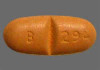
One of these, in case you were wondering. About life size.

And then remembered I'd already had one. 

Half an hour later, I started getting tired. This was no good, I had stuff to do. But I knew what was coming. Tiredness first, then dizziness. Then the double vision. For maybe an hour or more.

Episodes like these aren't uncommon in people with epilepsy. Our brains can run out of control, and it takes some pretty strong stuff to keep them in line. (A friend of mine takes the same meds I do, for another condition. She complains of being "whacked out" on 450 mg of the stuff. I take 2700 a day.) Fortunately, I take less medication than I used to, and I had some hints from my old neuro what to do. "Protein," he'd said. "It binds to protein." So I chugged a half-liter of a protein drink I keep around the house, and fifteen minutes later I was, if not OK, then at least good enough to go on with.

Side effects are common with anti-seizure medications, even when you're only taking what's prescribed. Before my meds were reduced, this was a daily occurrence. But if you're on the meds, there are usually tricks you can learn to minimize problems. Check with your neuro; check with your pharmacist. (Pharmacists are a great resource—and you usually see them once a month anyway. You might as well make friends.) And for those of you around us, please try and understand we take some pretty powerful stuff, and it can affect us in lots of ways: tiredness; memory problems; problems with balance, coordination, or eyesight; and other problems too. Just keep in mind, it's part of what we have to do to survive.


The Epilepsy Foundation of Western and Central Pennsylvania has a great page listing a lot of common epilepsy drugs and their side effects. And the main site of the Epilepsy Foundation also has a good discussion of side effects in general. I recommend both.

Thursday, August 11, 2016

Facing Epilepsy: In the Beginning

A Saturday, I think, at the end of March 1988. I was a junior in college, at a movie with my girlfriend when we noticed my left arm twitching every few seconds. I was concerned, but when it stopped after a few minutes I just made a note to go to the Student Health Center the next day. We went home, and I fell asleep.

The next thing I remember was my girlfriend putting my coat on. Tying my shoes. Crying. Leading me to a waiting university security squad car. After a few minutes, we were here:

University of Chicago Medical Center


For those of you without epilepsy, I'm not sure you can imagine what it's like to have your body start doing things without your realizing, or wanting it to. To feel like you might be about to totally lose control, at any moment and without warning. And losing consciousness? I'm never quite sure, when things go dark, that they'll come back again. Scary stuff.

Probably the worst thing for me, at the beginning, was not knowing why. They did a CT, and an MRI (which was new back then; they were still "NMRs"). They did a spinal tap. But no definite results, at least not that they told me. I'm sure that was frustrating to my parents. Me? I was just terrified, at least when I wasn't feeling woozy from whatever anti-seizure drugs I was on.

I got better, as they say. No, the seizures haven't stopped. But they've stopped scaring me as much. (I guess practice makes perfect? I've had a fair number by now.) And I know more than I did back then. If knowledge is power, welcome to the epilepsy power zone.

Welcome to me, facing epilepsy.

I want this blog to be a resource for everyone: a source of strength and friendship for those with epilepsy, of support for family and caregivers, of knowledge for everyone. Through my experiences i hope we can see that no one is alone in their struggle with epilepsy, and that everyone has the power to help