Showing posts with label ups and downs. Show all posts

Wednesday, January 11, 2017

Do You Remember...?

I've always had a bad memory, it seems. Always. I could memorize things, no problem—that really helped on tests. But when it came to remembering that I had to take out the trash, or remembering where I'd left my pen? Utter failure. I was famous for it in my family. (I've been known to forget where I left my glasses. This is not unusual, but it once took me about five minutes of searching to realize that I was wearing them.)

That seems to be common among people with epilepsy. The UK group Epilepsy Action reports that memory problems are one of the most common reasons for people with epilepsy to seek help. (They have a great page on the subject. Have a look.) Obviously loss of consciousness during some seizures prevents you from remembering what happened, but epilepsy can also cause interference with the brain's normal memory-forming processes even in between seizures. The same unusual brain activity that can give your neurologist clues about your epilepsy when you have an EEG can interfere with memory as well. Epilepsy can make us tired, or stressed, or depressed. That doesn't help either. And if your seizures start in the temporal lobe of the brain, where your memory lives, obviously that makes things worse.

Sad man can't remember where the temporal lobe is.


Some epilepsy medications can affect your memory too. Of the five times I've changed medications, three were because I felt my memory and my thought processes going fuzzy. That really scares me, because if I don't have my memories or my thinking, what's left of me? So I fight back by switching medications.

Given that a lot of us can't do much to prevent it, how do we cope? For me, I usually forget things like "Where did I leave this?" and "What did I come here to do?" and "What errands do I have to do?" So one thing that helps me a lot is using sticky notes. Writing stuff down and leaving it every imaginable place really boosts my ability to remember.

Well, maybe not every imaginable place.

If I put something down, I also try and pause for a few seconds and say to myself, "I left my phone on the table. I left my phone on the table." Or if I go into the kitchen to get my wife a drink, I'll tell her, "I'm getting you a drink." Repeating things like that can fix them in my mind better. It doesn't completely fix things, but it does help.

For anyone who's close to someone with epilepsy, please do keep this in mind. We do listen. We try our best. But sometimes, information just leaks out. Please be patient with us. Cut us a little slack when we lose track of things. Maybe you can help us with the memory aids.

And thanks for staying by us. That's what we need most of all.


Wednesday, December 21, 2016

"It Could Be Worse"

When anyone is going through a hard time, it can be hard to know what to tell them. Someone gets a diagnosis of cancer, or hears that a loved one has been injured or killed in an accident - what can you say to comfort them? "I'm sorry"? "It'll be all right"? "You'll come through it"? "They're in a better place now"? What could possibly recognize the shock and the pain someone is going through, the horrible situation they've been cast into?

As an epileptic, probably the least useful such phrase I've encountered is "It could be worse." You tell someone, maybe someone close, about something that's perhaps destroying your life, or maybe only providing a series of unwanted obstacles. Their response? "Well, it could be worse".

"I had a seizure, I can't drive for the next six months."

"Oh! Well, at least you're not in the ICU. It could be worse."

Well maybe this could be worse. (Photo copyright US Navy?)
Well no, it couldn't. It COULDN'T BE WORSE DAMMIT. Thirty years ago I was in college, healthy, feeling like I could do pretty much whatever I wanted and looking forward to a life of staying that way. I was not looking forward to taking six pills a day, getting blood sucked out of my arms two or three or four times a year before mandatory doctor appointments, spending thousands of dollars a year on medication required for me just to function pseudo-normally - and let's not get into the side effects, we've done that already.

I mean, sure. I don't have the brain tumor the doctors initially feared. I'm not going into the emergency room or the intensive care unit once or twice (or more!) a year. I'm not taking four or five medications, I don't need a bed rail when I sleep, I can even drive in reasonable safety. There are loads of other people I know who are worse off than I am.

But "it could be worse"? What does that do for me? I'm not always as badly off as I think I am, but I'm not always as well as I could be either. I don't need to be babied. I don't want to be babied. But my epilepsy is real, and it has real effects on me, and I need you to get that.

Look, I get that you might not know what to say. And yes, saying something is better than saying nothing. Saying nothing at all is just cold. But you want to know what to say? Try these:

"That's rough. Need anything?"
"I hear you. Can I help?"

Just something to let me know that you sympathize, that you're listening, and that you're willing (sincerely) to be there and help out as much as you can if needed.

Life's not usually hard for me. (Like it can be for my friends Daisy and Nichole.) But it can be, and your recognition of that fact is a very basic way to help me, a way to affirm that what I'm going through isn't insignificant and harmless. Could you at least give me that much?

Wednesday, October 12, 2016

Note To Self: You Have Epilepsy


It's not normal for me to change my medication; I haven't for years. But a few weeks ago I had just HAD IT with Trileptal. I told my neuro that I was tired of being tired, tired of the memory problems, tired of the more than occasional dizziness and lightheadedness and double vision. My last neuro had told me, "Well, at least your seizures are under control." Yeah, they were. But at what cost?

Many people with epilepsy are much less lucky than I am. My friends Tori, Daisy, Sam, and Brendan all have seizures that are not well controlled at all, in some cases not even with multiple medications. I'm fortunate to have been pretty well-controlled almost from the beginning. In the twenty-eight years I've had epilepsy, I've changed medications five times. Only once was because the medication didn't work. The other changes were made to try and cope with side effects. Changing medications merely to avoid side effects is a privilege I have that many don't; and I'm very much aware of that.

So my doctor told me about a newer medication, Vimpat, that I'd only have to take twice a day. She also commented that I was taking an awful lot of Trileptal. Like, a LOT lot. I wish she had told me that earlier; I would have changed up the meds long ago. So we made a plan: I'd start taking the Vimpat, beginning gradually as usual with only 50 milligrams twice a day, then increasing weekly to 200 milligrams twice a day by the end of four weeks' time. Once that was well in my system, we would gradually decrease the Trileptal in the hope of weaning me off it altogether.

It almost worked. As I began the Vimpat, my side effects became stronger, appeared more often, and lasted longer. By the end of three weeks, I was showing up to work incapable of doing anything. Time to see the neuro again.

"That shouldn't be happening," she said. Yeah that was kind of what I guessed. "Since you're basically on a therapeutic dose of the Vimpat, go ahead and start decreasing the Trileptal and we'll see what happens."

So we did. From 2700 milligrams (four and a half monstrous horse pills) a day, I cut down to 1500. Then 1200. Then 900. And then, the seizures started happening. After having three partial seizures in the course of a weekend (normally I get that many in nine or ten months), it was back to the doctor once more. She moved me up to the full dosage of Vimpat, and pushed my Trileptal back up from 900 to 1200 milligrams a day.

And that's where I stand now. Since I decreased the Trileptal, I haven't had any side effects. And I'm now noticing the effect that Trileptal had on my thinking; I'm much quicker to understand things, and I forget less. On the high dosage, I guess I was too fuzzy to notice how badly I was thinking, but I'm doing much better now.

Am I happy to still be on the Trileptal? No, not really; after all, that's what was giving me these nasty side effects, and I'm not completely sure I'm done with them. I'm not especially happy to be on two medications, period. It was really convenient having only one kind of pill to take; twice as many medications, in my mind, is twice the chance to forget something. And my "always take it with you" pill box has more to carry.

But I've been reminded of something really important: I have epilepsy. Much as it annoys me, much as I'd rather express my individuality and my difference some other way—pretty much any other way—this is a part of me, and it always will be. It's something I have to face. I'm not always happy about it. But I am what I am, you know? You guys with epilepsy, you're stronger than you know. We all are. We'll do this, together.


I met Tori, Daisy, Sam, and Brendan on a Facebook epilepsy support/epilepsy blogger group. Daisy, Sam, and Tori have amazing blogs documenting their journeys: Daisy's at My Seizure Journey, Sam's at The Storm Inside My Head, Tori's at Epileptic20Something. Please check their blogs out—all three of them are great writers, and everyone has a different journey and different things to teach us.

Friday, September 9, 2016

What If Somebody's Watching? What If Nobody's Watching?


There are two seizures I remember having in my first year away from home: one partial, one generalized. (Here's a quick explanation of what that means.) Both were scary, for opposite reasons; both depressing.

I don't remember any more which one came first. Probably the bigger one. It was first semester parent-teacher conference-time, mid-October. I had a whole series of appointments during weekday evenings, and I was ready to spend 30 minutes with each of the parents, talking about how their kids were doing. Did the parents know I had epilepsy? You know, I don't even remember now. My boss knew—though that's another story. So I'm not sure whether the mom and dad I was with actually knew what was going on or not. I don't remember their names any more, but I know they were nice people. Friendly, and their son (I remember it was their son I was evaluating) was doing well.

We had just started talking when all of a sudden I couldn't any more. I knew what was coming, but I couldn't do anything about it. Couldn't say anything. I felt myself slipping out of the chair, under the table; I felt my left arm jerking. And that was all.

I don't really remember afterwards. I think some of the other parish staff were there, making sure I could get up, getting me home. All I could think about was how embarrassed I was, how I had been so weak in front of the parents, how I had experienced something I never wanted to experience again in front of the people I least wanted to appear vulnerable near.

The other seizure was a partial seizure. This must have happened later, actually; after I had that seizure I couldn't drive for a year. So I was walking home from Fred Meyer with a bag of groceries when all of a sudden I got That Feeling. I stopped. A quarter mile from home. Nobody to call. Was I going to go full-on generalized seizure on the sidewalk there? Hit my head against the concrete. Roll down the slope into the chain link fence? Or maybe out into the road, into traffic. DAMN was I scared. I knew if I was going to generalize I probably had five minutes to get home; of course, home was probably 8 minutes away. I did my best, pushing myself along as fast as I thought I could trust my legs to go.

Finally I got home and popped a double dose of my Depakote. I had another partial seizure a minute or two later, not as bad. And that was it; the medication helped my brain stay in control over its rogue neurons.

Sometimes I feel my life revolves around pills
Both of these were really scary. With the first, I was scared of having people around, because they might misunderstand. They might look down on me. They could, I don't know, think I was as broken and malformed as I thought I was. But then again. A seizure, even the partial one, with no one around removed any possibility that anybody might be able to understand, or help, or sympathize. I didn't know which was worse.

I don't see myself, anymore, as broken and malformed. I don't feel so embarrassed and upset at the possibility of having a seizure in public. I want people to know, to be able to care; because when it comes down to it, I need people.

None of us, and certainly none of us with epilepsy, can get through this life alone. But with understanding, we can support each other. We all have a part to play in owning epilepsy.

Monday, August 15, 2016

Medication Side Effects - Win Some, Lose Some

Yeah right.

Well I wasn't going to post this for a while, but then this morning happened. I got up early and took my meds right at 8:00, as usual. I even marked it down on EpiDiary (my personal favorite epilepsy medication and seizure tracker) so I'd remember. But then life started happening. I got busy, and round about 11 I couldn't remember whether I'd had my morning meds. So I took a pill "just in case".

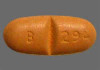
One of these, in case you were wondering. About life size.

And then remembered I'd already had one. 

Half an hour later, I started getting tired. This was no good, I had stuff to do. But I knew what was coming. Tiredness first, then dizziness. Then the double vision. For maybe an hour or more.

Episodes like these aren't uncommon in people with epilepsy. Our brains can run out of control, and it takes some pretty strong stuff to keep them in line. (A friend of mine takes the same meds I do, for another condition. She complains of being "whacked out" on 450 mg of the stuff. I take 2700 a day.) Fortunately, I take less medication than I used to, and I had some hints from my old neuro what to do. "Protein," he'd said. "It binds to protein." So I chugged a half-liter of a protein drink I keep around the house, and fifteen minutes later I was, if not OK, then at least good enough to go on with.

Side effects are common with anti-seizure medications, even when you're only taking what's prescribed. Before my meds were reduced, this was a daily occurrence. But if you're on the meds, there are usually tricks you can learn to minimize problems. Check with your neuro; check with your pharmacist. (Pharmacists are a great resource—and you usually see them once a month anyway. You might as well make friends.) And for those of you around us, please try and understand we take some pretty powerful stuff, and it can affect us in lots of ways: tiredness; memory problems; problems with balance, coordination, or eyesight; and other problems too. Just keep in mind, it's part of what we have to do to survive.


The Epilepsy Foundation of Western and Central Pennsylvania has a great page listing a lot of common epilepsy drugs and their side effects. And the main site of the Epilepsy Foundation also has a good discussion of side effects in general. I recommend both.