Showing posts with label medications. Show all posts

Wednesday, January 11, 2017

Do You Remember...?

I've always had a bad memory, it seems. Always. I could memorize things, no problem—that really helped on tests. But when it came to remembering that I had to take out the trash, or remembering where I'd left my pen? Utter failure. I was famous for it in my family. (I've been known to forget where I left my glasses. This is not unusual, but it once took me about five minutes of searching to realize that I was wearing them.)

That seems to be common among people with epilepsy. The UK group Epilepsy Action reports that memory problems are one of the most common reasons for people with epilepsy to seek help. (They have a great page on the subject. Have a look.) Obviously loss of consciousness during some seizures prevents you from remembering what happened, but epilepsy can also cause interference with the brain's normal memory-forming processes even in between seizures. The same unusual brain activity that can give your neurologist clues about your epilepsy when you have an EEG can interfere with memory as well. Epilepsy can make us tired, or stressed, or depressed. That doesn't help either. And if your seizures start in the temporal lobe of the brain, where your memory lives, obviously that makes things worse.

Sad man can't remember where the temporal lobe is.


Some epilepsy medications can affect your memory too. Of the five times I've changed medications, three were because I felt my memory and my thought processes going fuzzy. That really scares me, because if I don't have my memories or my thinking, what's left of me? So I fight back by switching medications.

Given that a lot of us can't do much to prevent it, how do we cope? For me, I usually forget things like "Where did I leave this?" and "What did I come here to do?" and "What errands do I have to do?" So one thing that helps me a lot is using sticky notes. Writing stuff down and leaving it every imaginable place really boosts my ability to remember.

Well, maybe not every imaginable place.

If I put something down, I also try and pause for a few seconds and say to myself, "I left my phone on the table. I left my phone on the table." Or if I go into the kitchen to get my wife a drink, I'll tell her, "I'm getting you a drink." Repeating things like that can fix them in my mind better. It doesn't completely fix things, but it does help.

For anyone who's close to someone with epilepsy, please do keep this in mind. We do listen. We try our best. But sometimes, information just leaks out. Please be patient with us. Cut us a little slack when we lose track of things. Maybe you can help us with the memory aids.

And thanks for staying by us. That's what we need most of all.


Wednesday, October 12, 2016

Note To Self: You Have Epilepsy


It's not normal for me to change my medication; I haven't for years. But a few weeks ago I had just HAD IT with Trileptal. I told my neuro that I was tired of being tired, tired of the memory problems, tired of the more than occasional dizziness and lightheadedness and double vision. My last neuro had told me, "Well, at least your seizures are under control." Yeah, they were. But at what cost?

Many people with epilepsy are much less lucky than I am. My friends Tori, Daisy, Sam, and Brendan all have seizures that are not well controlled at all, in some cases not even with multiple medications. I'm fortunate to have been pretty well-controlled almost from the beginning. In the twenty-eight years I've had epilepsy, I've changed medications five times. Only once was because the medication didn't work. The other changes were made to try and cope with side effects. Changing medications merely to avoid side effects is a privilege I have that many don't; and I'm very much aware of that.

So my doctor told me about a newer medication, Vimpat, that I'd only have to take twice a day. She also commented that I was taking an awful lot of Trileptal. Like, a LOT lot. I wish she had told me that earlier; I would have changed up the meds long ago. So we made a plan: I'd start taking the Vimpat, beginning gradually as usual with only 50 milligrams twice a day, then increasing weekly to 200 milligrams twice a day by the end of four weeks' time. Once that was well in my system, we would gradually decrease the Trileptal in the hope of weaning me off it altogether.

It almost worked. As I began the Vimpat, my side effects became stronger, appeared more often, and lasted longer. By the end of three weeks, I was showing up to work incapable of doing anything. Time to see the neuro again.

"That shouldn't be happening," she said. Yeah that was kind of what I guessed. "Since you're basically on a therapeutic dose of the Vimpat, go ahead and start decreasing the Trileptal and we'll see what happens."

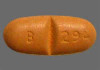
So we did. From 2700 milligrams (four and a half monstrous horse pills) a day, I cut down to 1500. Then 1200. Then 900. And then, the seizures started happening. After having three partial seizures in the course of a weekend (normally I get that many in nine or ten months), it was back to the doctor once more. She moved me up to the full dosage of Vimpat, and pushed my Trileptal back up from 900 to 1200 milligrams a day.

And that's where I stand now. Since I decreased the Trileptal, I haven't had any side effects. And I'm now noticing the effect that Trileptal had on my thinking; I'm much quicker to understand things, and I forget less. On the high dosage, I guess I was too fuzzy to notice how badly I was thinking, but I'm doing much better now.

Am I happy to still be on the Trileptal? No, not really; after all, that's what was giving me these nasty side effects, and I'm not completely sure I'm done with them. I'm not especially happy to be on two medications, period. It was really convenient having only one kind of pill to take; twice as many medications, in my mind, is twice the chance to forget something. And my "always take it with you" pill box has more to carry.

But I've been reminded of something really important: I have epilepsy. Much as it annoys me, much as I'd rather express my individuality and my difference some other way—pretty much any other way—this is a part of me, and it always will be. It's something I have to face. I'm not always happy about it. But I am what I am, you know? You guys with epilepsy, you're stronger than you know. We all are. We'll do this, together.


I met Tori, Daisy, Sam, and Brendan on a Facebook epilepsy support/epilepsy blogger group. Daisy, Sam, and Tori have amazing blogs documenting their journeys: Daisy's at My Seizure Journey, Sam's at The Storm Inside My Head, Tori's at Epileptic20Something. Please check their blogs out—all three of them are great writers, and everyone has a different journey and different things to teach us.

Friday, September 23, 2016

What Happens When Medication Doesn't Work?

So I told you about one of the first seizures I had alone. But I didn't give you the whole story.

About a year after I was first diagnosed with epilepsy, I switched medications and began taking Depakote, a drug with quite a few potential side effects—as always—but quite good seizure control. I was happy; my doctors were happy; life was good. Good enough that I was comfortable moving 2000 miles away to a new job.

After my job interview, work went quite well: I virtually forgot, and so did everyone else, that I had seizures or anything at all. I took my pill in the morning, and then I took my pill again at night, and I just went on with my life. That's how it's supposed to be, right?

And so life went on; I got through (as I remember) most of my first year just fine. Parent-teacher conferences went fine; my trip back home over Christmas went fine; and I was looking forward to finishing the school year.


Life went on nicely, then, until I had that nasty seizure I told you about. I immediately (well, as soon as I could think again) made an appointment with my neurologist. After all, if you're taking a drug, it's because it works, and you expect it to keep working.

Bottle of white pills, open and spilled on table.
A good medication is one that works, after all.

I didn't know why it wasn't, and it scared me. Was I going to have another seizure again? When? Where?  At work? Walking home from the grocery store? Falling down stairs?

Well, the doctor explained to me, in some cases the drug doesn't keep working the way it began. If your body develops tolerance, and gets used to the medication, the drug can just stop having any effect.

Drug tolerance just means that your body gets more used to a drug. With Depakote, one of the ways this can happen is that your brain can start getting overwhelmed with how much it's receiving, and actively push the drug away from where it most needs to be. This doesn't appear to happen very often, and if the drug is initially successful, it almost always continues to be.


But not in my case. My body was reacting just as if I hadn't taken anything in days. The neuro increased my dosage from 1200 mg a day to 1800, and I was fine—for another month, at least. Then another seizure, and another medication bump: to 2400 mg. This time the neuro looked concerned. I was already concerned.

One of the cautions with Depakote is that it can be toxic to your liver. At 2400 mg a day, my doctor explained, I was pushing up to a point where it wouldn't be safe for me to take much more.  "I think we need to try something else," he said.

Well, OK. But what are the guarantees that something else would work? Would I have to change again? Would I develop tolerance out of nowhere again and have unexpected seizures? All sorts of questions popped up. But anything was better than seizures at that point; what other option did I have?

So I moved on to Tegretol, which worked quite well for me for a long time, and that was that. I've never developed tolerance to anything else; but I've always been on the lookout.

I guess that's the lesson. I'm very aware of what I'm taking, and I've never again been complacent and willing to trust that a medication will "just work". At the same time, I'm happy that there are a lot of options, and I realize that what happened to me was very rare and probably just a fluke. If you take medication for any condition, check it. Know your side effects; know your alternatives. And if anything weird or unexpected happens, tell your doctors. They should be able and willing to help you to something better.

Knowing your meds is part of owning your epilepsy. You can do this!

Tuesday, September 13, 2016

So I'm Scared


I tell myself it's OK to be scared, epilepsy is a scary condition. That doesn't make it any better.

I went to my neurologist yesterday morning. I'm having side effects from my current medication, Trileptal. More so, it seems, since I've lost weight. I was definitely overweight, I needed those 20 pounds gone; but the less weight, the more I'm affected by the amount of drugs I'm taking. My last set of blood tests showed my Trileptal levels normal, but on the very high end of normal even before taking my morning meds. Usually, a reading like that indicates that there's a good reason to decrease medication levels.

At the same time, I'm still having a few breakthrough partial seizures a year. Not many - but three or four a year is way more than I'd rather have. And way more than people close to me feel happy about.

So, after discussing all the issues, the neuro and I decided to change my medication. Vimpat is a new drug on the market for partial-onset seizures like mine. I'm going to gradually move from the Trileptal to the Vimpat over the course of the next several weeks, first raising my dose of Vimpat gradually, and then (only then) decreasing or maybe even eliminating the Trileptal.

That's a frightening thought. What if I get so over-medicated I can't think straight? What if I don't respond to the Vimpat and start seizing again? What if I can't drive for six months? Or a year? I haven't had a generalized seizure in over 11 years; I don't want to break that streak. And I'm petrified. I've told you guys what having a seizure feels like. DO NOT WANT. WOULD NOT ORDER AGAIN.

Rationally, I can tell myself, "It's OK. I've done this before." I've switched from Dilantin, to Depakote, to Tegretol, to Keppra and Lamictal, to Trileptal. Each time without any noticeable problem. I even have an appointment with my neuro in 5 weeks to check on how things are going. So there's no reason to believe this time will be any different.

Unfortunately, my mind doesn't need a reason to believe anything. I walked out of the doctor's office this morning, head high, totally happy at what I'd chosen to do. Then it hit me. What was I walking into? I'm not the only one affected by my health; and even if I were, maybe this isn't something to be taken as lightly as I tend to take things.

I'm scared. I'm sure my wife is scared. She's only seen me switch medications once before. I haven't done it for over a decade. What could happen? Anything, right? Too much medication, too little medication, seizures, side effects; all irrational fears perhaps, but all very real.

You know what, though? This is part of owning my epilepsy. If I'm going to be the one in charge, I have to accept how it can make me feel. It's OK for epilepsy to scare me, it really is.

Cause I'll scare it right back.

Monday, August 15, 2016

Medication Side Effects - Win Some, Lose Some

Yeah right.

Well I wasn't going to post this for a while, but then this morning happened. I got up early and took my meds right at 8:00, as usual. I even marked it down on EpiDiary (my personal favorite epilepsy medication and seizure tracker) so I'd remember. But then life started happening. I got busy, and round about 11 I couldn't remember whether I'd had my morning meds. So I took a pill "just in case".

One of these, in case you were wondering. About life size.

And then remembered I'd already had one. 

Half an hour later, I started getting tired. This was no good, I had stuff to do. But I knew what was coming. Tiredness first, then dizziness. Then the double vision. For maybe an hour or more.

Episodes like these aren't uncommon in people with epilepsy. Our brains can run out of control, and it takes some pretty strong stuff to keep them in line. (A friend of mine takes the same meds I do, for another condition. She complains of being "whacked out" on 450 mg of the stuff. I take 2700 a day.) Fortunately, I take less medication than I used to, and I had some hints from my old neuro what to do. "Protein," he'd said. "It binds to protein." So I chugged a half-liter of a protein drink I keep around the house, and fifteen minutes later I was, if not OK, then at least good enough to go on with.

Side effects are common with anti-seizure medications, even when you're only taking what's prescribed. Before my meds were reduced, this was a daily occurrence. But if you're on the meds, there are usually tricks you can learn to minimize problems. Check with your neuro; check with your pharmacist. (Pharmacists are a great resource—and you usually see them once a month anyway. You might as well make friends.) And for those of you around us, please try and understand we take some pretty powerful stuff, and it can affect us in lots of ways: tiredness; memory problems; problems with balance, coordination, or eyesight; and other problems too. Just keep in mind, it's part of what we have to do to survive.


The Epilepsy Foundation of Western and Central Pennsylvania has a great page listing a lot of common epilepsy drugs and their side effects. And the main site of the Epilepsy Foundation also has a good discussion of side effects in general. I recommend both.